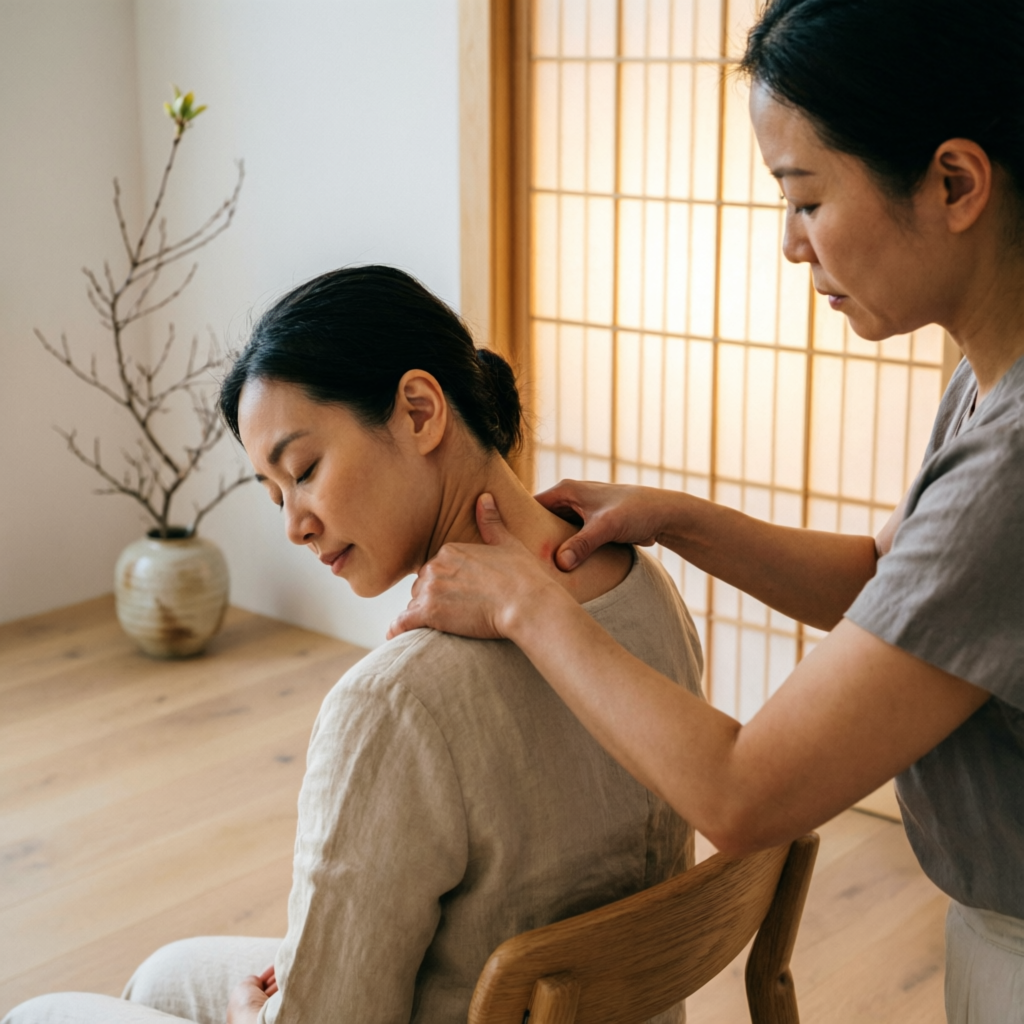
Deep tissue massage is not a competition for pressure. It is a conversation with the places that have been holding on.
Shoulders can collect a surprising amount of the day. A long stretch at a screen, a commute, a workout, a stressful conversation or a habit of bracing without noticing — over time, these small moments can become one familiar feeling of heaviness.
A thoughtful deep tissue massage starts by finding out what “deep” means for you. Sometimes it is slow, sustained work on a specific area. Sometimes it is a blend of focused pressure, stretching and more flowing massage. The aim is not to leave you sore for the sake of it. The aim is to help the body feel more spacious and supported.
What is deep tissue massage?
Deep tissue massage uses slower strokes and focused pressure to work with areas of muscular tension. A therapist may use the fingers, thumbs, palms, forearms or elbows depending on the area and the pressure that feels appropriate. The treatment is usually tailored rather than performed as a fixed sequence.
“Deep tissue” does not have to mean maximum pressure. A skilled therapist will adjust pace, direction and intensity as they listen to the body. Some areas may benefit from firm contact while others need a gentler approach, movement or time to settle.
Why do shoulders feel so busy?
The neck and shoulder area is constantly involved in how we work, move and respond to the world. Screen posture, repetitive tasks and stress can all influence how we hold ourselves. When a muscle feels overworked, the surrounding area may start helping out, which can create a wider sense of tension.
Massage cannot diagnose the cause of pain, and it is not a substitute for medical care. But focused bodywork can be a useful part of a broader self-care routine when it is appropriate for you. If you have a new, severe or persistent symptom, speak with a qualified healthcare professional first.
How to get more from a deep tissue massage
Start with the headline, not the diagnosis. Tell your therapist what you notice: “my shoulders feel heavy,” “my lower back feels tight” or “I want help with post-training tension.” This gives the treatment a useful starting point without requiring you to label the problem.
Be honest about pressure. Deep tissue massage should feel purposeful, not like something you must endure. A clear “that is a little too much” is valuable information. The treatment can be adapted immediately.
Give yourself a small landing zone. If you can, avoid rushing straight back into a full calendar. Drink water, move gently and notice how your body feels over the next day. The goal is to carry a little more ease into ordinary movement.
Deep tissue, the Miki way.
Miki is a Japanese massage therapist with more than 10 years of experience and a background as a former personal trainer. Her North Sydney treatments combine Japanese-inspired care with an intuitive, practical approach to the body in front of her.
For a desk-tired neck and shoulders, the treatment may focus on the upper body and arms. For full-body tension, it may move through the back, hips and legs. Each appointment begins with a conversation, and every technique remains optional and adjustable.
Miki Japanese Massage is located at Lv3/71 Walker Street, North Sydney, and is open Tuesday to Saturday from 11:00am to 7:30pm. Book a 45-minute focused session or ask about a longer Signature Japanese Massage.